
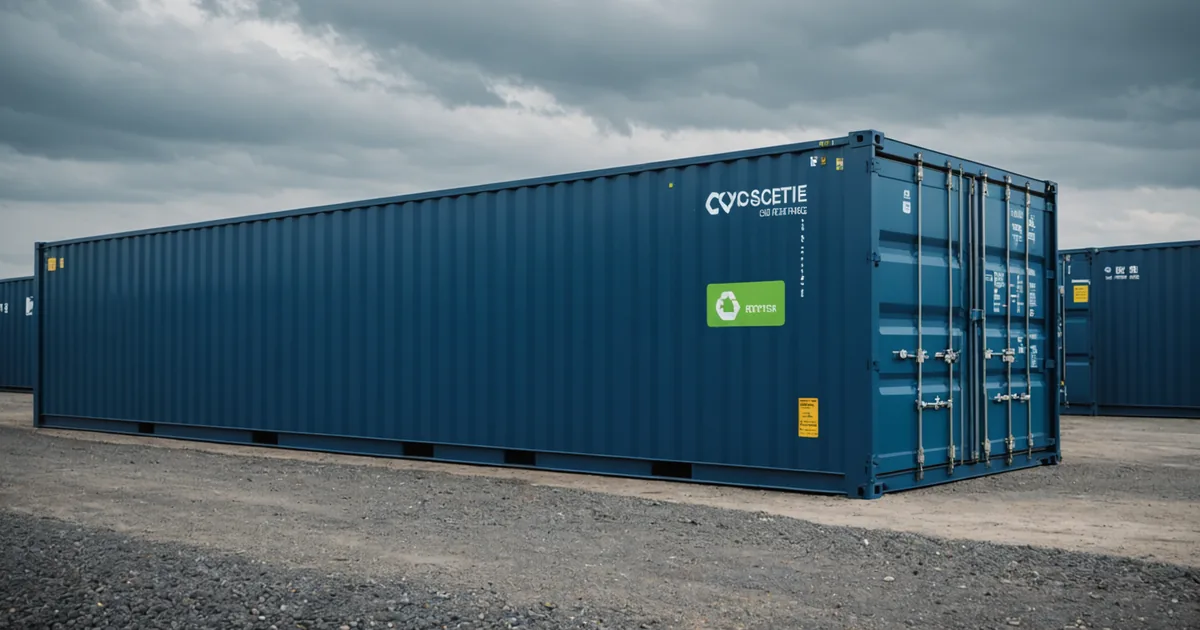
Battery energy storage systems (BESS) are appearing more frequently in conversations about depot electrification, and for good reason: they address a constraint that software scheduling alone cannot solve. But they are also a significant capital investment, and the economics only close under specific conditions. Buying a BESS before understanding those conditions is a common and expensive mistake.
This article walks through the two primary use cases for on-site storage at a fleet depot, the conditions under which the investment makes sense, and what you need to know about coordinating a BESS with your vehicle charging schedule.
The two problems BESS solves for fleet depots
On-site battery storage can do two distinct things for a depot operator, and the business case for each is different.
The first is grid connection augmentation. If your contracted connection is 200 kW but you need to charge 40 vans overnight and cannot afford the 18-month wait for a connection upgrade, a BESS charged slowly during the day (drawing 100 kW over 10 hours) can provide 400 to 600 kWh of additional capacity to discharge during the evening charging window. This supplements your grid feed during the hours when demand from the vehicles exceeds what the connection can deliver.
The second is peak demand shaving. If your grid connection is adequate for overnight charging but the vehicle return window creates a demand spike in the evening peak hours, a BESS can be used to supply power during that spike while limiting grid draw. The BESS charges during low-demand off-peak hours and discharges during the evening peak, keeping the 15-minute demand readings within a lower band.
These two use cases are distinct in their design requirements. Grid augmentation needs storage capacity sized to the charging energy deficit. Peak shaving needs storage sized to the duration and magnitude of the demand spike, which is typically shorter and more predictable.
When grid augmentation makes sense
The business case for BESS as a grid augmentation tool depends on two things: the cost and timeline of a grid connection upgrade compared to the cost of BESS, and whether the BESS can be utilized for more than just grid augmentation to improve its ROI.
In the Netherlands, connection upgrades managed by network operators like Alliander and Enexis in congested areas (much of the Randstad as of 2025-2026) often face 12- to 24-month lead times, sometimes longer, depending on the required grid reinforcement. The costs for upgrading a commercial connection from 200 kW to 400 kW can range from tens of thousands to over a hundred thousand euros depending on the work required on the medium-voltage network.
A BESS sized to deliver, say, 250 kWh of overnight charging buffer costs roughly €150,000 to €250,000 for industrial-grade lithium iron phosphate (LFP) systems at 2025-2026 pricing, including installation and grid integration. If that eliminates the need for a connection upgrade or allows you to operate a larger fleet for two to three additional years before upgrading, the numbers can work.
The caveat is that BESS adds operational complexity. It requires a battery management system (BMS) integration with your charging scheduler, monitoring for thermal management, and periodic inspection under Dutch electrical safety requirements. It is not a set-and-forget installation.
When peak demand shaving makes sense
Peak shaving with a BESS makes financial sense primarily when your capacity tariff is high relative to the cost of the BESS, and when the demand spike is concentrated enough in time to be addressed with a reasonably sized system.
Consider a depot where the evening vehicle return consistently creates a 45-minute demand spike between 18:00 and 18:45, pushing grid draw to 480 kW against a normal baseline of 80 kW. The demand charge is based on that 480 kW peak. If your capacity tariff is €10 per kW per month, that 400 kW of excess demand costs €4,000 per month, or €48,000 per year.
A BESS that can supply 200 kW for 60 minutes (approximately 200 kWh of usable capacity) could limit grid draw during that window to 280 kW rather than 480 kW, reducing the demand charge basis by about €2,000 per month. At a system cost of €150,000, the payback period from demand charge savings alone would be around 6 years, which is marginal for most operators.
The economics improve substantially if two conditions are also present: a high peak-to-off-peak tariff ratio (so the BESS also captures meaningful energy arbitrage value in its daily cycle) and access to flexibility program revenues (some Dutch network operators currently offer payments to commercial assets that can respond to grid congestion requests, though the specifics of these programs are evolving under the Energiewet 2025 framework).
What smart scheduling does first, before BESS
A common question we encounter is whether BESS is needed as part of an initial fleet electrification setup. For most depots, the answer is no, and the right sequence is: implement smart charging scheduling first, measure the actual demand profile under managed charging, then decide whether residual demand peaks justify BESS investment.
Without managed charging, a 40-van depot with unmanaged evening returns might see 550 kW demand peaks. With managed charging that defers load to the overnight off-peak window, the same depot might peak at 160 to 200 kW. The capital case for a BESS designed to shave a 550 kW peak is very different from one designed to shave a 200 kW peak, or it may not be needed at all.
We are not saying BESS is never the right answer. We are saying the decision should be based on actual measured demand data under a smart charging regime, not on the worst-case unmanaged scenario. Operators who install BESS before implementing schedule management sometimes discover they have paid for infrastructure that managed charging would have made unnecessary.
Integrating BESS with a charging scheduler
When a BESS is present at a depot, the charging scheduler needs to know about it. The BESS is effectively an additional power source (and load, when it is charging) that the optimizer must account for in its load management decisions.
Modern commercial BESS systems expose a control interface, typically via Modbus TCP or a REST API, that allows a higher-level system to set charge and discharge power targets. The charging scheduler can use this interface to dispatch BESS power during vehicle charging windows and set BESS charging schedules during off-peak periods when grid power is cheapest.
A well-integrated system looks like this: the BESS charges from 01:00 to 06:00 at whatever power level the grid connection can spare after vehicle charging needs are met. At 07:00, when the last vehicles are completing their morning charge cycle, the BESS is at full state of charge. During the evening vehicle return window (18:00 to 19:30), the BESS discharges to supplement the grid feed, limiting peak demand. The scheduler tracks both vehicle SoC and BESS SoC simultaneously, adjusting charging rates to stay within the depot's demand limit even as the BESS contributes its share.
Without this integrated dispatch, a BESS installed at a depot with a charging scheduler can end up working against the scheduler, either charging at the same time as vehicles (adding to the grid draw rather than reducing it) or discharging at the wrong time. The integration requirement is a real technical step, not an assumption.
What to check before deciding
If you are considering BESS for your depot, there are four questions worth working through before engaging a system integrator.
First: what is your actual demand profile today, and what will it look like after smart charging is implemented? If you do not have this data, gather it before sizing anything.
Second: what is the timeline and cost for a grid connection upgrade with your network operator? Get this in writing. The answer may make BESS unnecessary or it may confirm BESS as the faster path.
Third: what is your capacity tariff per kW per month, and how large is the demand peak you are trying to reduce? Calculate the annual demand charge saving from a specific peak reduction target and compare it to system cost.
Fourth: does your BESS supplier support the control interface your charging scheduler requires? Not all commercial BESS systems have the same API surface. Verify compatibility before procurement, not after installation.
Ready to cut your depot energy bill?
See how Decade Energy's optimizer works with your fleet size and tariff contract.
Book a Demo